
A hint is enough. No need for certainty, nor even solid clues: in the closed environment of the school, the slightest concern about a student’s safety triggers a well-oiled mechanism. However, not everything immediately shifts to the judicial realm. Between concerning information and formal reporting, the nuance makes all the difference, for families and for those who bear the responsibility of the alert.
Behind institutional language lie decisions that mark the lives of families. Separating concerning information from reporting is already a choice in how to provide support. As soon as a vulnerability emerges, teachers do not open an investigation: they observe, record, and pass the baton. From that moment on, daily life shifts for both the child and their parents.
Concerning information or reporting: two paths, two realities
Everything can start with a vague impression. When no certainty is imposed, nor any objective fact, concerning information takes over. This approach, much more measured, involves transmitting an alert to the concerning information collection unit (CRIP) of the department. A student who has become very reserved, unexplained absences, concerning remarks noted by a teacher: all these situations can lead to this first step. Here, the goal is to provoke vigilance, to seek solutions, without immediately triggering judicial intervention.
As soon as there is urgency or solid suspicion, violence, massive neglect, medical threat, everything accelerates. The reporting is then made directly to the public prosecutor. In this case, the response is swift: immediate measures, interventions from the justice system, potential temporary protection for the child.
The exact process, its mechanisms, the feelings of families and professionals have been analyzed in detail in the reporting procedures by the school. This overview sheds light on each step to better understand the triggers and consequences of these actions.
The school, a place of observation but not a court
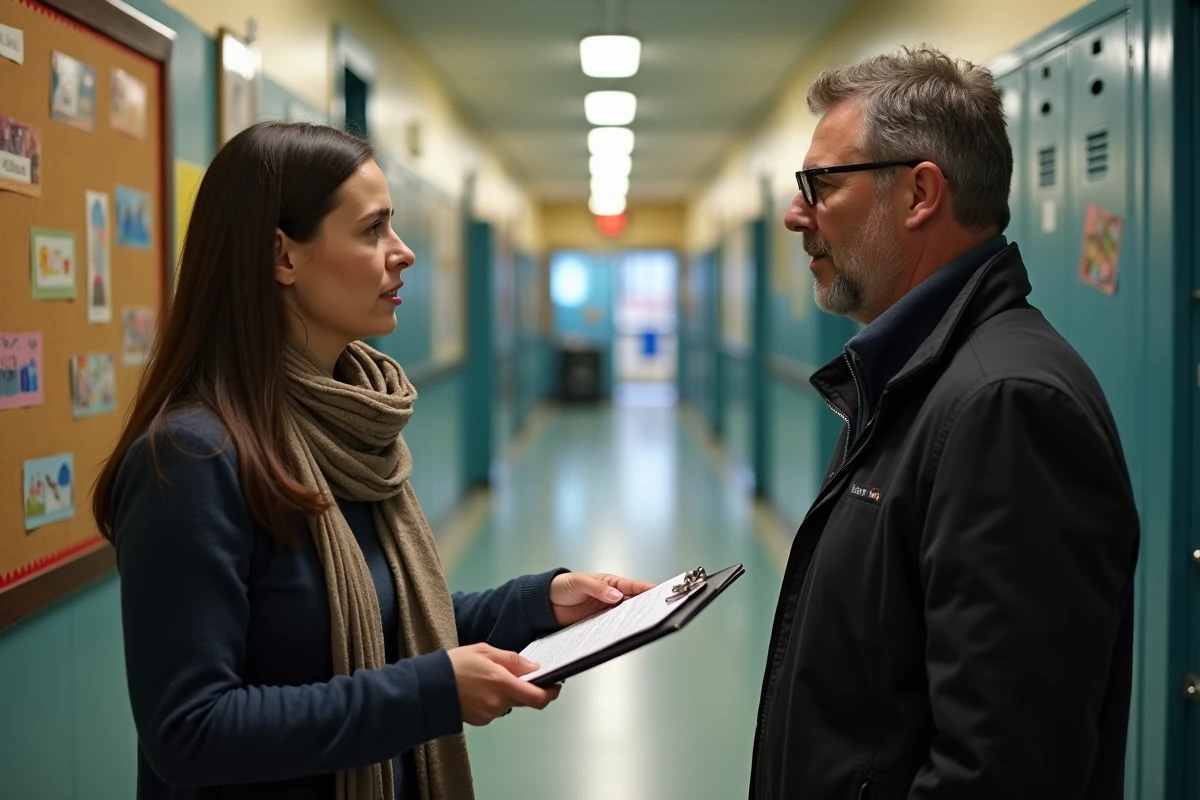
The educational team does not seek to investigate a case; it plays a role of vigilance. Unexplained bruises, puzzling remarks, repeated absences: rarely does a person act alone. Everything first goes through collective exchange, the confrontation of feelings among colleagues, with the goal of avoiding impulsive reactions.
In practical terms, here are the major steps of the internal process before any transmission:
- Gather and share observations to cross perspectives, avoid hasty interpretations, and grasp underlying movements
- Draft either a concerning information for the CRIP when the situation calls for vigilance, or a report quickly sent to the prosecutor if there is a characterized danger
- Send the file to the competent authority, which can initiate a social investigation or implement immediate protective measures
The child always remains at the heart of the process. After receipt, social workers examine the family context, assess the child’s dynamics, the support around them, and the general atmosphere at home. Choices vary: some needs call for simple assistance, while others confront the family with a radical upheaval. Whatever happens, the family unit never emerges unscathed from this process.
When the family must cope with the procedure
Everything can change with a phone call. Parents and children suddenly see their intimacy dissected: unexpected visits from social workers, summons, adjustments to schedules to meet external demands. Every detail of daily life becomes potentially significant: a simple family routine transforms into a subject of analysis, sometimes into a criterion for institutional evaluation.
In this context, several consequences often arise for families, to varying degrees:
- Imposed home checks, meticulous observations of the living environment and behaviors of everyone involved
- Depending on the situation, referral to child welfare services with a series of interviews, repeated visits to the home, and in some cases, a proposal for temporary placement in a foster family or in a children’s village
- For the most serious cases, intervention by the juvenile judge: judicial placement, restriction of visitation rights, drastic changes to family daily life
The code of social action and families outlines the general framework, but the experience plays out in the margins, in the uniqueness of each story. Families may go through a challenging episode before regaining their balance, or feel permanently destabilized. For each, these moments leave an imprint, whether discreet or profound.
A simple report scribbled on a desk can alter the trajectory of an entire family. Behind each file, a reconfigured life, reshaped habits, and always this taut thread: to protect children, at any cost.