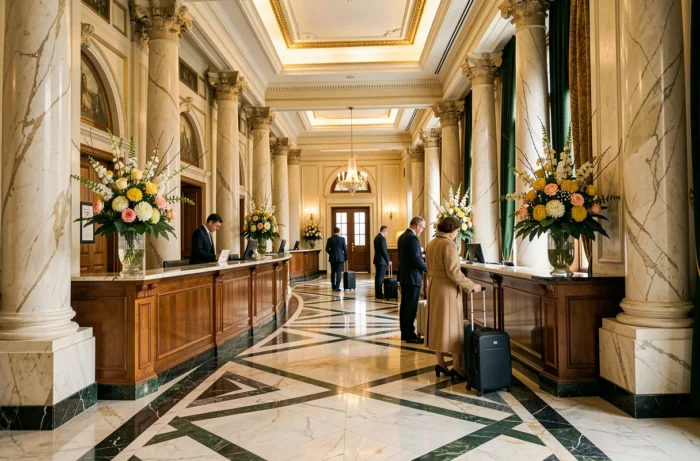
The Astoria Hotel, in Bastia, bears a Corsican name: “A Storia” means “the history.” Fifteen rooms, a decor that blends clean lines and baroque touches, a location in the city center just minutes from the old citadel. The format is that of a charming three-star hotel, not a resort where one remains cloistered.
Spending a night here implies going out, walking, crafting your own itinerary in a city whose heritage density is best explored on foot.
Parking in Bastia: the constraint that the hotel listing does not show
Most accommodations in the historic center of Bastia do not have private parking. This logistical fact alters the actual cost of a night and the comfort of arrival, especially for travelers disembarking from a ferry late in the evening.
Street parking is limited and often paid during the day. Central parking lots generally close at night, complicating late-night arrivals by car. For a stress-free automotive stay, the free parking at Toga, accessible 24/7, offers a concrete alternative: it is connected to the center by a free shuttle.
The Astoria Hotel, located near the Bastia train station, combines rail access with pedestrian proximity to the old port. Travelers planning an itinerary between Corsica and the Italian Ligurian coast will find practical information about coastal villages accessible from Corsican ports via Livorno on the Cinque Terre Unpacked website.
The choice of arrival mode (ferry, plane, train) largely determines the usefulness of parking. Arriving by train or on foot from the maritime port places the hotel in a more favorable position than what a simple address search on a map suggests.
Rooms at the Astoria Hotel: how the fifteen-room format changes things
An establishment with fifteen rooms does not offer the same experience as a hundred-room hotel rated in the same category. The staff-to-guest ratio is different, as is the possibility of receiving personalized advice about the city.
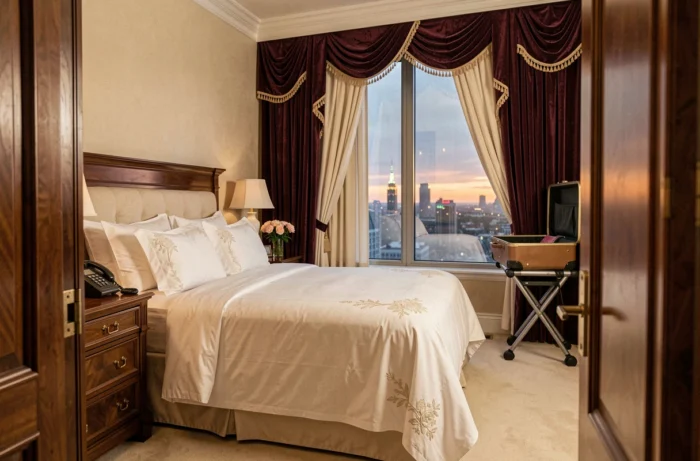
Seven superior rooms include an additional room in the form of a lounge, with a table and chairs. This is not a trivial detail: having a separate space to read, work, or simply sit other than on the bed changes the quality of a stay, even a short one.
Accessibility and configuration
A room for guests with reduced mobility is available upon reservation. The fact that it exists in such a limited range is worth noting: not all charming hotels of this size offer one, and the information does not always appear clearly on booking platforms.
The decor announced by the establishment combines clean lines and baroque touches. In practice, this translates to rooms where the furniture remains understated but where certain elements (mirrors, lighting) provide visual contrast. The atmosphere aims for a change of scenery without overload, which corresponds to a transit or short stay rather than an extended retreat.
Bastia on foot from the Astoria Hotel: accessible routes and neighborhoods
The hotel’s location, near the train station and the center, allows easy walking access to the main points of interest in Bastia. The city is structured around two pedestrian hubs: the old port (Porto Vecchio) and the citadel (Terra Nova), connected by a network of alleys and stairs.
- The old port concentrates terraces, restaurants, and evening activities. It is also the starting point for walks to the Dragon Pier and the Saint John the Baptist Church.
- The citadel, situated on a hill, houses the palace of the Genoese governors and offers a view of the port and the sea. The climb from the lower district takes about ten minutes on foot.
- The market at the Town Hall Square operates in the morning and offers Corsican products (charcuterie, cheeses, honey) that are not easily found on the mainland.
A one-night stay at the Astoria Hotel is enough to cover these three areas, provided you arrive in the early afternoon. Bastia is best explored on foot, not by car, and the hotel is positioned to take advantage of this reality.
The port as a starting point to Italy
Bastia is connected to several Italian ports by regular ferry lines. The route to Livorno, in particular, opens access to the Ligurian coast. Travelers extending their stay beyond Corsica often use Bastia as a transit stop, which gives a well-placed hotel night both a logistical and tourist function.
The proximity between the hotel and the maritime station reduces downtime between check-out and boarding. For a traveler moving between Bastia and the Italian coast, choosing a central hotel avoids an additional transfer on the day of departure.
Rates and booking a charming hotel in Bastia: what to compare
Booking platforms display prices that vary according to the season, room type, and channel used (direct site, aggregator, phone). For a fifteen-room hotel, availability can change rapidly in high season, between June and September.
Comparing rates between the hotel’s official website and third-party platforms remains a useful step. Independent hotels sometimes offer cancellation conditions or included services (breakfast, early check-in) that do not appear on aggregators.
What the price does not tell you
The displayed rate for a night does not reflect the actual cost of the stay if you add paid parking, a transfer from the airport, or breakfast taken outside. In the case of the Astoria Hotel, the central location reduces additional costs related to taxi or rental car travel.
- The free parking at Toga, open continuously, eliminates the parking expense for motorized travelers willing to use the shuttle.
- The proximity to the train station allows avoiding a paid transfer from the airport if opting for the train or bus connection.
- The restaurants at the old port, accessible on foot, offer a varied price range for dinner, without requiring motorized travel.
The final bill depends less on the room price than on how one organizes arrival and meals. A well-located charming hotel offsets part of its rate through the transportation savings it generates.
Bastia as a stopover and not a final destination
Bastia sometimes suffers from an image deficit compared to Ajaccio, Bonifacio, or Porto-Vecchio. The city is often perceived as a transit point, a port of arrival that one leaves immediately to head to Cap Corse or Balagne.
A night at the Astoria Hotel allows testing the opposite hypothesis: Bastia deserves a stop for itself, not just as a transit hub. The Genoese citadel, the old port, Saint Nicholas Square, and the morning market create a dense program for a short stay.
The cultural landscape of the city is evolving. New urban renovation projects and heritage enhancement are underway, which could change the tourist offer in the coming years. For now, the charm of Bastia lies precisely in this gap between its architectural richness and its still moderate attendance compared to the southern stations of the island.
Spending a night in a central hotel is betting on walking, on the chance of an alley, on an improvised dinner facing the port. The Astoria Hotel, due to its size and location, fits into this logic of a short, mobile stay rooted in the city.