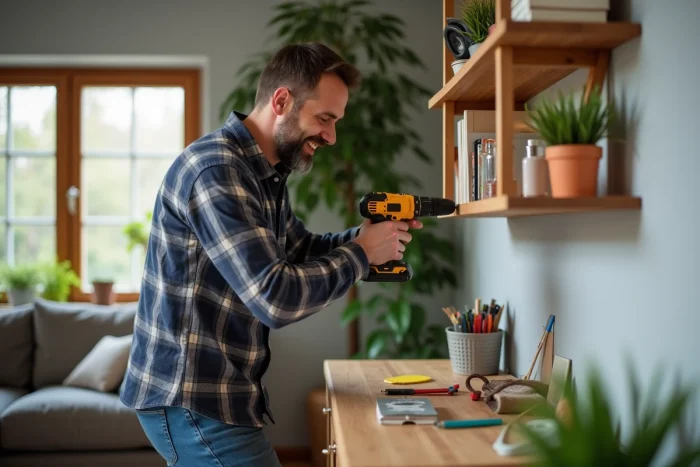
Most DIY failures stem not from a lack of materials, but from poor preparation or inappropriate technique choices. Some versatile tools are useless for specific tasks, while simple methods, often overlooked, ensure a lasting result.
Tips passed down through generations are not always found in specialized manuals. A few adjustments in organization or the order of steps can sometimes turn a chore into success. Practical advice, drawn from experience, often makes the difference.
Why DIY at home changes everything: independence, savings, and satisfaction
Few experiences are as formative as taking on your own projects. Tackling a project at home gives you the opportunity to choose your materials, decide on every detail, and understand how your space works. This independence is built at every step: by repairing, improving, and customizing. It allows you to break free from reliance on external services and shape your interior in your own way.
On the budget side, the numbers speak for themselves: renovating or making things yourself significantly lowers the bill. By investing in reliable, well-chosen tools and studying each step before starting, you limit mistakes and invest every euro thoughtfully. Experienced DIYers know: it’s better to have a few sturdy tools than a collection of gimmicky accessories. For those looking to equip themselves without wasting, focusing on the essential tools for successful DIY projects truly makes a difference.
But the best part is undoubtedly the feeling of accomplishment. When you finish a project, even a modest one, the pride is real. You learn from your mistakes, gaining confidence with each achievement. To move forward, get inspired, and progress, nothing beats discovering L’Atelier du Bricolage. Concrete ideas, proven tips, and advice tailored to every level: everything is there to start, progress, and succeed in DIY projects, from the simplest to the most ambitious.
What pitfalls to avoid when starting out? Common mistakes and how to sidestep them
Anticipate: the key to a well-executed project
Starting without a plan is asking for complications. The urge to rush the preparation, neglect reading the instructions, or believe that you’ll save time: these are classic traps. Yet, learning to plan effectively remains fundamental. Before starting, take inventory of your materials, gather the appropriate tools, and dissect each instruction. This time invested upfront can prevent many troubles later on.
Never compromise on safety
There’s no skipping safety. Glasses, gloves, mask: each tool requires its precautions. A clear, well-lit space allows for serene work. Keeping a first aid kit within reach is a habit to adopt.
Here are some classic mistakes to watch out for before diving in:
- Not underestimating surface preparation: cleaning, sanding, dusting, every intervention starts there.
- Knowing how to choose your materials: opt for quality supplies suited to your project. A wood that’s too soft or an unsuitable screw can compromise stability.
- Respecting drying times for glues or paints: haste often ruins the final result.
Excessive confidence helps no one. Even beginner DIY projects require method and rigor. It’s better to aim for simplicity, test on scraps, and seek advice if needed. Learning to DIY takes time, sometimes humility, but it’s also the joy of seeing your progress grow at each step.

Concrete ideas and easy tips to succeed in your first DIY projects, even without experience
Start small, aim right
You don’t need a complete workshop or years of practice to get started. An accessible, well-targeted project is enough to build confidence. Assembling a shelf in the bathroom, refurbishing a thrifted piece of furniture, making a planter for the balcony: these first steps make all the difference. You learn with each achievement, refine your technique, and discover the pleasure of a job well done.
Before starting, stack the odds in your favor with these key points:
- Prepare your space: set up a clear area, ensure proper lighting, and gather tools and materials within reach.
- Use appropriate tools: a level for a straight shelf, a screwdriver for effortless fastening, a manual sander for wood, and suitable brushes for finishing.
- Follow the steps: measure accurately, mark locations, and check before drilling or screwing. Precision is better than haste.
For decorating, draw inspiration from natural materials. Wood, easy to work with, offers multiple possibilities. A coffee table made from reclaimed pallets, a restored garden bench, a wooden planter on the terrace: these creations add character to every space.
The success of a DIY project relies heavily on the clarity of the action, the simplicity of the techniques, and the ability to adapt tips to your constraints. Furnishing, decorating, repairing: each task becomes an opportunity to learn, a step towards greater independence. And if the best way to progress is precisely to dive in, step by step, project by project?