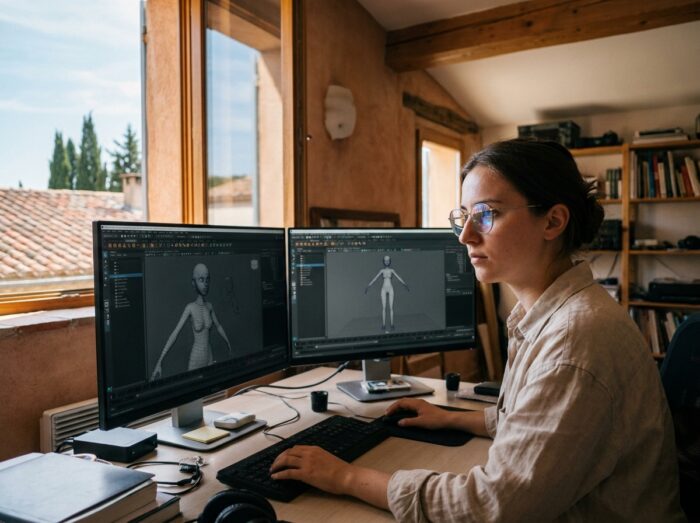
3D animation is also developing far from major metropolitan areas. In the south of France, schools located in medium-sized cities offer comprehensive programs, from character design to post-production, with facilities comparable to those of Parisian or Lyon campuses. The question is no longer whether the offer exists outside Montpellier or Marseille, but how to assess its educational and professional solidity before committing.
RNCP Title and Recognition: The First Filter Before Choosing a 3D Animation School
Even before comparing programs, one criterion determines the value of the diploma obtained: its registration at RNCP level 6 or 7. Since the decisions of France compétences starting in 2023, several unregistered private titles have not been renewed or have been heavily restructured. For a student enrolling in a medium-sized city in the south, checking this point protects against an investment of several years in a training program whose administrative recognition remains fragile.
The RECA label (Network of French Animation Schools) serves as a second reliable indicator. It guarantees a pedagogical foundation validated by the profession. Schools located outside major urban areas, such as MoPA in Arles, are part of this network. Their location in human-sized cities does not prevent them from showing strong professional integration rates.
When looking to find a 3D animation school in the south of France, this double filter (RNCP + professional label) allows for quickly ruling out programs whose diploma does not open the doors to studios.
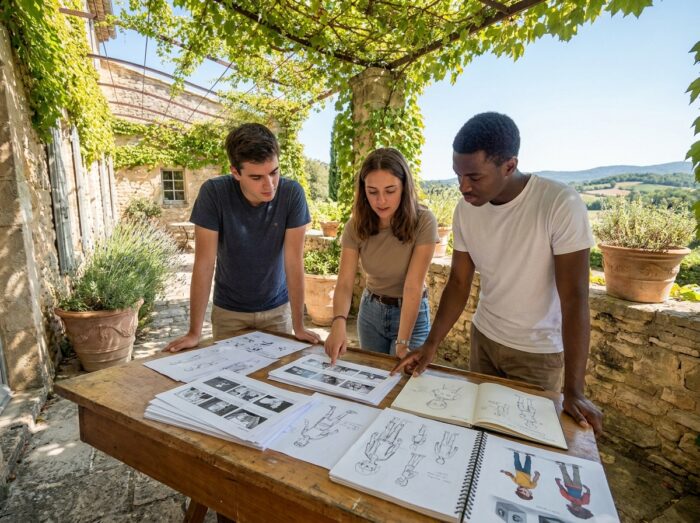
Satellite Campuses in Medium-Sized Cities: What Alternation Changes for 3D Training
In recent years, major private networks (Studio M, Brassart, e-artsup) have been deploying satellite campuses in medium-sized cities in the south: Béziers, Nîmes, Alès. This strategy responds to a concrete demand from students who want to stay close to home without giving up a structured curriculum in animation or video games.
These branches differ from historical campuses by a specific lever: alternation in the third, fourth, and fifth years. The national dynamic of apprenticeships, which has seen a significant increase in recent years, directly benefits these programs. An independent studio based in Nîmes or Perpignan can host an apprentice in modeling or compositing, where a student in Paris would find themselves competing with hundreds of candidates for the same positions.
What Alternation Brings Beyond Financing
The apprenticeship contract covers tuition fees and pays a salary. The financial advantage is evident in cities where the cost of living is significantly lower than in Marseille or Toulouse. The other benefit, less visible, is the building of a local professional network from the start of training.
An apprentice who works for two years in a small studio in the south accumulates experience on real projects (advertising, motion design for local authorities, assets for video games). This path produces a demo reel that is more diverse than a final project completed solely in school.
Evaluating a 3D Animation Curriculum in a Small City: Concrete Criteria
The program displayed on a website is not enough to judge the quality of a training course. Several concrete elements can help differentiate schools located outside major urban areas:
- The software and hardware resources accessible to students: rendering stations, licenses for Maya, Houdini, ZBrush, or Blender available for free, shared rendering farm. A campus without adequate computing infrastructure forces students to work on their own machines, which limits the complexity of projects.
- The ratio of active professional speakers to permanent teachers. A credible curriculum in 3D animation relies on animators, riggers, or VFX supervisors who work concurrently in studios. Checking their credits on recent productions provides a direct indicator.
- The employment rate six months after graduation and the list of studios that have hired graduates. Some schools publish this data. Others provide it upon request during open house days.
- Student participation in festivals (Annecy, Clermont-Ferrand, Siggraph). The short films selected for these competitions signal a high level of production.
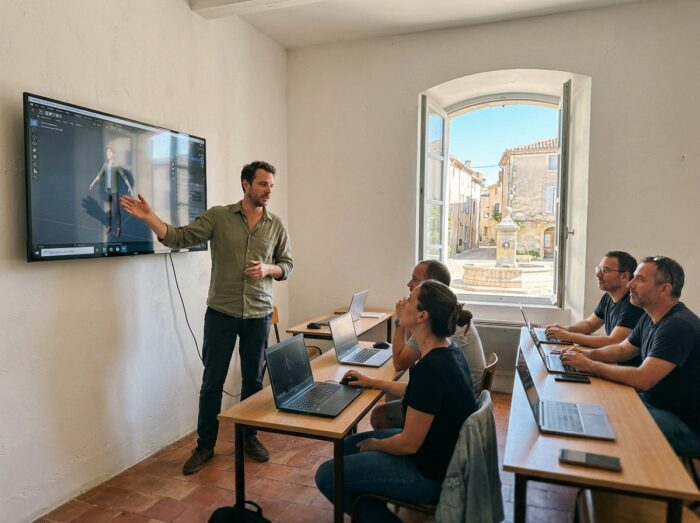
Local Creative Ecosystem: Why Arles, Angoulême, or Other Medium-Sized Cities Are Not Default Choices
Some medium-sized cities in the south concentrate a professional network related to animated imagery that far exceeds their demographic size. Arles hosts MoPA, whose student films are regularly selected for international festivals.
Angoulême, often associated with comic books, also has a structured video game and animation ecosystem centered around independent studios and recurring professional events. These cities offer a calm working environment, a moderate cost of living, and direct access to professionals whose availability is greater than that of their Parisian counterparts.
The Geographical Factor in Building the Portfolio
A campus located in a city with a strong visual identity (heritage, light, landscapes) also influences the artistic direction of student projects. The final films produced in these cities often carry a distinct graphic identity, making them more memorable for a festival jury or a studio recruiter.
Choosing a 3D animation school in a medium-sized city in the south is betting on an environment where the focus on creative work is less disrupted by the logistical constraints of large urban areas. The determining criterion remains the rigor of the curriculum and the quality of the speakers, not the postal code of the campus.