
In May 2024, the Ministry of Education reported a 27% increase in security incidents related to digital usage compared to the previous year. The obligation to report vulnerabilities, established in January, reveals new dysfunctions in managing access to educational platforms.
Some institutions are still deploying equipment on non-segmented networks, despite official recommendations and the presence of practical guides since 2022. The update of the inter-ministerial action plan for the 2024 school year aims to address these gaps and strengthen prevention measures, particularly in primary schools and middle schools.
Digital in Schools in 2024: What Changes and Uses for Students, Teachers, and Families?
In 2024, educational technology is asserting itself with renewed vigor in schools. The expansion of digital tools is disrupting habits, reshaping learning methods from the early years of primary school to the threshold of high school. The digital foundation for schools, in place for two years, is now a reality for the majority of public schools: tablets, laptops, and interactive whiteboards have become everyday allies. Teachers have an unprecedented choice of educational resources to support their students: digital textbooks, interactive applications, collaborative platforms, a whole arsenal designed to enrich teaching.
On the students side, access to educational continuity is expanding. No need to fall behind in case of absence or temporary closure: digital resources ensure the transmission of knowledge, anywhere and at any time. Starting in middle school, digital skills certification is now part of the curriculum, with assessments integrated into the program. High school, for its part, emphasizes the teaching of digital and computer science, training young people to critically assess the flood of information online. The use of webmail in Caen is a concrete illustration: it aims to provide reliable tools tailored to the demands of academic communication.
Parents are reclaiming their place in the school ecosystem through digital work environments (ENT). These spaces facilitate tracking their child’s progress and provide access to all administrative information. While the mastery of digital skills is advancing, inequalities persist: some areas still struggle to benefit from adequate equipment or connectivity. In light of this observation, stakeholders in the Ministry of Education continue to structure digital usage in schools. The goal remains clear: to enable every student, regardless of their context, to benefit from these new practices.
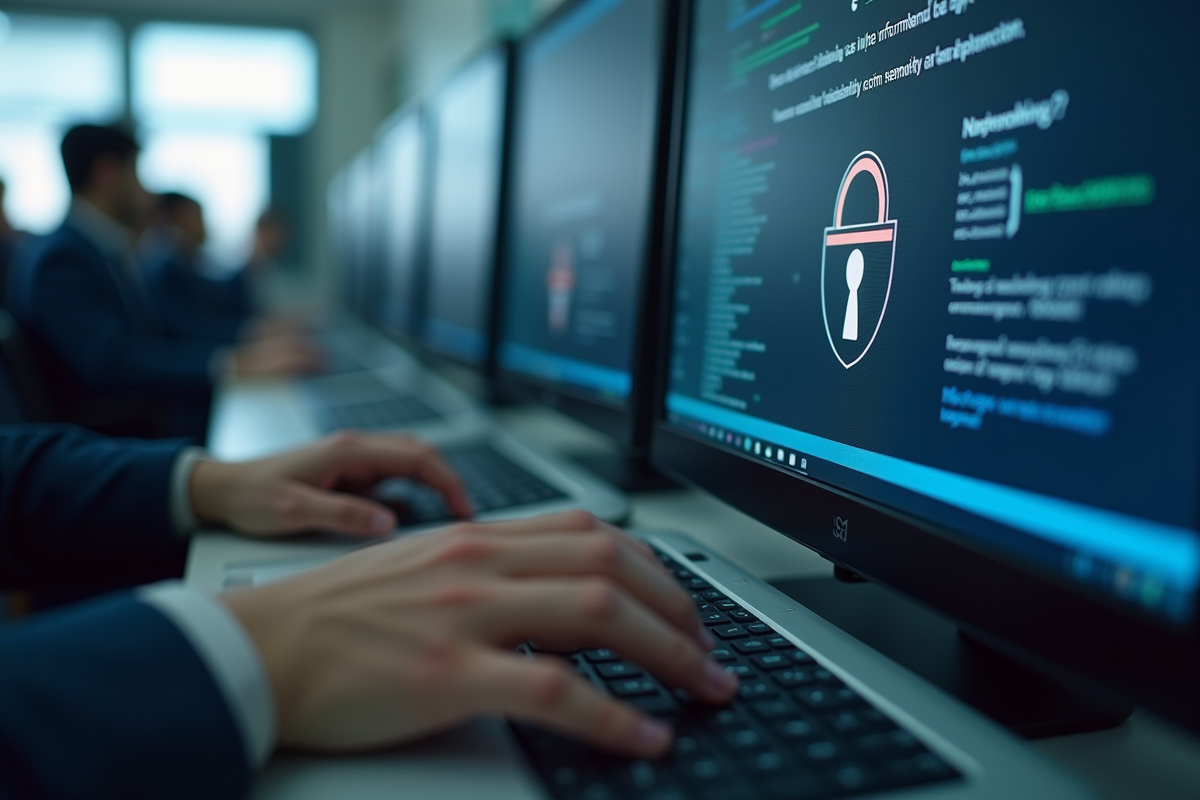
Cybersecurity in the Ministry of Education: Initiatives, Challenges, and Best Practices for a Smooth Start to the School Year
Cybersecurity has now become a central concern for the Ministry of Education. In the face of the increasing number of ransomware attacks, phishing, and identity theft attempts, the ministry is refining its strategy. The challenge: to protect the integrity of the personal data of millions of students and teachers while ensuring educational continuity in increasingly digitized ecosystems.
The data controller within each institution ensures compliance with the GDPR. Privacy and online identity protection are becoming daily requirements. The SDET framework (strategic plan for digital work environments) structures access security, rights management, and data encryption. To support these developments, the ANSSI and the European Commission are disseminating practical guides and initiating awareness campaigns.
Risks and Responses: Overview of Best Practices
To enhance security on a daily basis, several reflexes are essential in schools:
- Adopt a code of conduct for all users of educational technology.
- Strengthen protection against viruses and malware through regular updates.
- Raise awareness among students and staff about the risks related to data integrity: vigilance against suspicious emails, strict password management.
- Involve families in the protection of personal data: sharing best practices, using the DIGCOMP framework for education on digital usage.
The widespread use of digital tools expands the attack surface of schools. Now, information system security is no longer solely the responsibility of IT: it is the concern of the entire educational community. Ultimately, collective vigilance is the best defense against threats that evolve relentlessly. Tomorrow, every click, every chosen password, every consulted guide will weigh in the balance of security at school. Who will take on this shared responsibility?