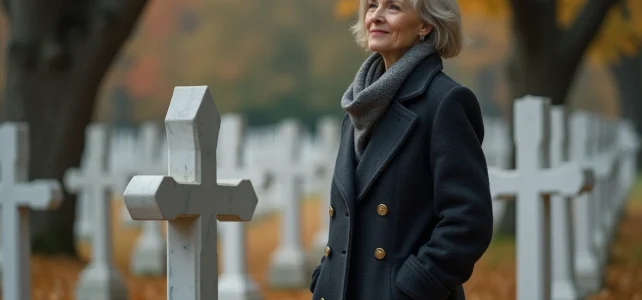
Marble is no longer an obvious choice, yet some still prefer it over granite, which reigns supreme over French graves. Behind this less common option are specific reasons: resistance, symbolism, legal constraints, but also an attachment to history and uniqueness.
Marble, a material whose nobility has not faded, continues to attract despite its more discreet presence in cemeteries. Contrary to trends, it is rooted in an ancient heritage and carries a strong symbolic weight, while requiring increased vigilance for maintenance against time and the elements.
Marble Crosses on Graves: A Meaningful Tradition
At every turn in a French cemetery, the gaze inevitably falls upon the funeral cross. Immutable, it stands as a silent marker for memory. When shaped from marble, this cross does not merely signify the faith of the deceased: it saturates the stone with a personal imprint, a discreet bearer of a unique message.
Where paths and convictions intersect, the cross takes various forms, all rich in meaning. To clarify, here are the most common variations encountered:
- The Latin cross, omnipresent throughout the territory
- The Celtic cross, recalling the Celtic roots of regions like Brittany or Normandy
- The Orthodox cross, a testament to traditions from the East
- The Huguenot cross, discreetly reminding of Protestant freedom of conscience
Each choice expresses a story, a belonging, or a tribute to a lineage. Far from being fixed in pure tradition, the marble cross for graves transforms under modern influences: engraved names, quotes, or QR codes to maintain memory beyond the stone.
However, the framework is not entirely free: regulations oversee, setting limits on permitted shapes, materials, and dimensions. Within these boundaries, each family shapes a tribute that reflects them, oscillating between rules, the desire for transmission, and fidelity to memory. Choosing a marble cross is also about inscribing the voice of loved ones into eternity.
Why Does Marble Attract for Funeral Ornaments? Symbolism, Aesthetics, and Durability
Choosing marble in funerals is betting on a material that transcends ages without losing its grandeur. It is not just a matter of aesthetics: marble links memory and matter, the ephemeral and the anchored.
In the collective imagination, white Carrara marble evokes uprightness, purity, and stability. Where wood withers, and raw stone may seem harsh, marble imposes a refined presence. An heir to Antiquity, it signifies the desire to anchor a trace, to resist oblivion, storms, cold, and the passage of years.
Aesthetically, there is no monotony: marble reveals an infinity of shades. Bright white, solemn black, elegant veining… One can have a name, a date, a cherished phrase engraved, or even integrate technology today like a QR code linking to an online memory space. Each of these marks embodies the desire to personalize without ever falling into excess.
As for resistance, it remains a topic of debate against granite, but marble retains a special aura. However, it requires rigorous attention: regular care, soft cloths, neutral products are allies for families wishing to preserve the clarity and shine of the stone through the seasons. The advice of a local stonemason, knowledgeable about municipal regulations, often proves decisive.
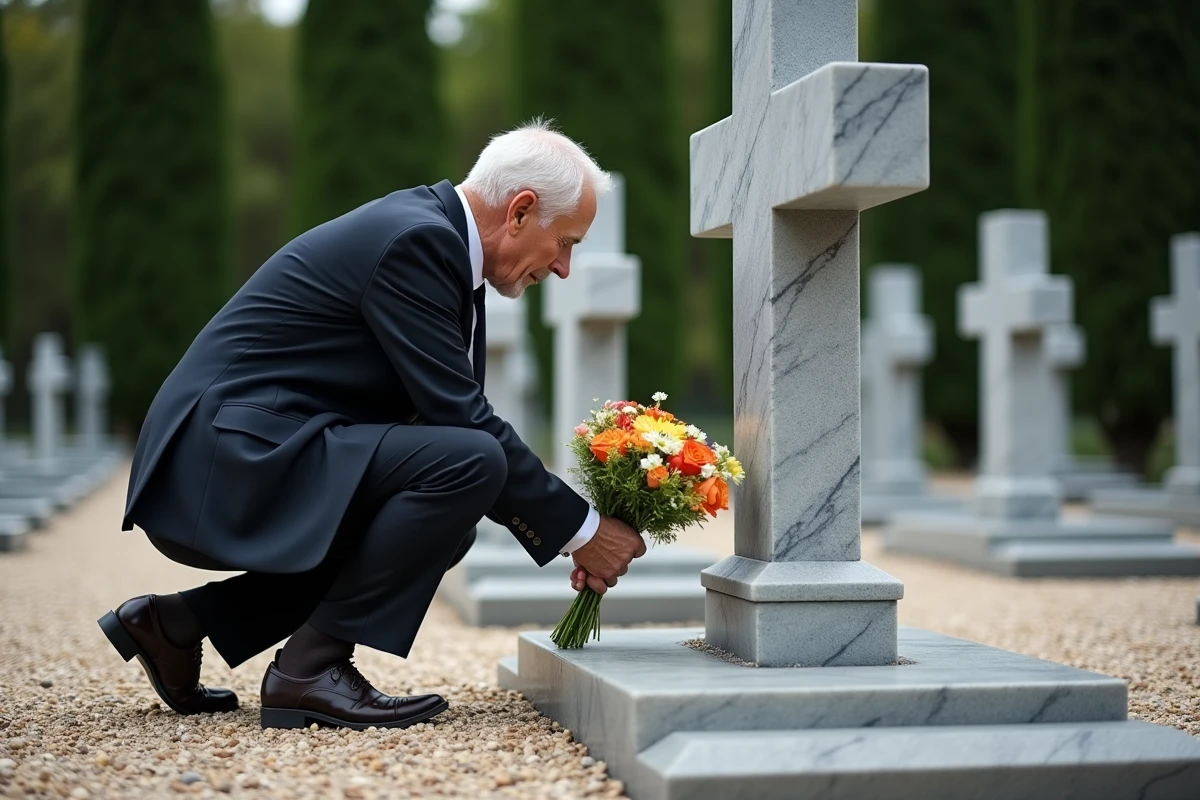
Practical Tips for Choosing and Installing a Marble Cross on a Grave
Before any steps, consulting the cemetery’s internal regulations is an essential step to avoid any unpleasant surprises. Each municipality states its own rules regarding the size, shape, and materials allowed for erecting a marble cross.
Several points deserve particular attention:
- Engaging the expertise of a funeral marble professional facilitates each step: choosing the shade, style (Latin, Celtic, Orthodox, Huguenot), engraving the name, dates, and, if desired, installing a memorial QR code.
- Installation requires true mastery: stable base, solid fixation, every detail counts. Marble, heavy and majestic, leaves little room for improvisation: an experienced stonecutter knows how to ensure impeccable stability.
- For maintenance, prioritize clear water, soft cloths, and avoid any corrosive products. This is the best way to protect the readability of inscriptions and the natural beauty of the material.
Today, the personalization of the monument takes new forms. Secular or religious symbols, subtle or refined ornaments, each choice can reflect the personality and story of the deceased. Funeral services accompany families from the initial idea to the final installation, ensuring a tribute worthy of the memory.
Choosing a marble cross is preferring frank memory over silent disappearance. An timeless gesture, this choice imprints the passage of a being into the grain of the rock and leaves in every aisle of the cemetery the certainty that a bond has been woven, to last beyond visible time.