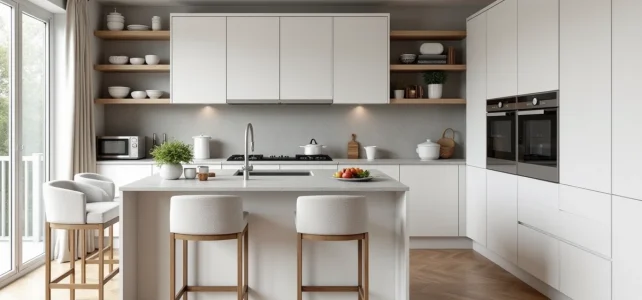
When starting to estimate a fitted kitchen project, the first instinct is often to look at online catalogs. The problem is that the price displayed for a showroom model almost never corresponds to the final bill. Between adjustments related to the room’s configuration, the choice of appliances, and the cost of installation, the gap can represent a significant portion of the initial budget.
Understanding what affects the price and estimate of a fitted kitchen before signing anything helps avoid unpleasant surprises at delivery.
Price differences between regions: the invisible cost of the kitchen estimate
It’s rarely mentioned in buying guides, but the geographical location of the project site heavily influences the final estimate. An identical project (same furniture, same appliances, same area) can cost significantly more in Île-de-France or major metropolitan areas than in rural areas or medium-sized cities.
This discrepancy doesn’t only come from the hourly rate of installers. It also includes delivery fees, the availability of craftsmen, and the local cost of living, which impacts kitchen designers’ estimates. Comparisons of regional estimates on specialized platforms show differences that can reach a third of the total amount for equivalent services.
Requesting at least three estimates in your geographical area remains the most reliable way to gauge the real price of the local market. A Parisian estimate is useless for calibrating a budget in Limoges.

Modular kitchen: a middle ground that changes the budget
Competitors systematically pit flat-pack kitchens against custom kitchens. This distinction becomes blurred with the rise of modular kitchens offered by brands like Ikea (Metod Maximera range), Leroy Merlin (Delinia), or Mobalpa. These systems allow for the combination of standard cabinets with personalized fronts, countertops, and interior fittings.
The result resembles custom work, but the price remains closer to the mid-range. You gain flexibility without blowing the budget, provided you carefully check what the estimate actually includes.
What the modular estimate often overlooks
- The cutting and adjustment of countertops to the exact dimensions of the room, which most brands charge extra for
- The fillers, skirting boards, and finishing trims, which are rarely included in the catalog price of the modules
- The plumbing and electrical connections, which sometimes require the intervention of a craftsman separate from the kitchen installer
An attractively priced modular estimate can therefore inflate significantly once these items are added. Checking line by line what is included in the price helps avoid discovering extras on installation day.
Countertop and appliances: the two items that sway the estimate
In a fitted kitchen, two lines of the estimate account for the majority of price variations: the countertop and the built-in appliances. The rest (cabinets, hinges, drawers) varies less from one range to another.
Countertop: the material dictates the budget
A laminate costs a fraction of the price of quartz or granite. Ceramic, which has become popular in recent years, falls into the high-end range. Solid wood requires regular maintenance but remains affordable in purchase price.
The choice of countertop material directly influences the total cost of the kitchen, sometimes more than the number of cabinets. This item is often underestimated when focusing solely on the fronts.
Appliances: built-in or freestanding
Built-in appliances (oven, refrigerator, dishwasher integrated behind matching fronts) provide a uniform look but increase the budget. Freestanding appliances help reduce the bill and maintain the freedom to replace them independently.
Feedback varies on this point: some kitchen designers include appliances in their overall estimate with partner brands, while others charge separately for them. Comparing estimates that do not include the same elements skews any attempt at competition.
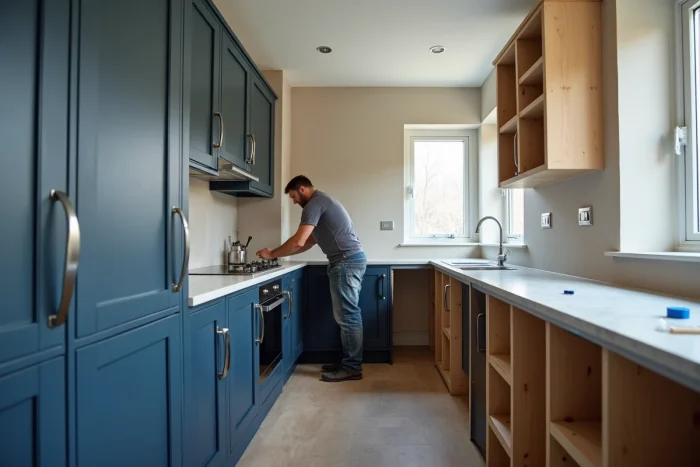
Ten-year warranty and installation by a craftsman: a justified cost
Installation represents a significant portion of the total budget. Going through a kitchen designer who employs their own installers generally ensures coverage under the ten-year warranty. This legal obligation protects against defects for ten years.
With an independent craftsman, the ten-year warranty is not systematically included. It is essential to verify that the installer has valid insurance. A lower installation rate that excludes this coverage is not a saving; it’s a risk.
Read the installation estimate line by line
- The assembly of the furniture and their wall mounting
- The connection of the sink, dishwasher, and hood
- The commissioning of the appliances and adjustments
- The disposal of packaging and floor protection during the project
An installation estimate that does not detail these elements deserves a request for clarification before signing. Disputes almost always arise from a missing line in the initial estimate.
Concrete tips to reduce the cost of a fitted kitchen
Reducing the budget does not necessarily mean downgrading on all items. A selective approach yields better results.
Investing in elements that you touch and use every day (soft-close drawers, durable countertops, quality faucets) and saving on visible but less frequently used items (fronts, handles) allows you to focus the budget where wear is felt first.
Another often-overlooked lever: ordering the kitchen during clearance periods of the brands, usually in January and September. Discounts on showroom models or end-of-line products can represent real savings, provided you check that the dimensions match your project.
The estimate for a fitted kitchen is not read as a global price. It is an addition of technical choices, local constraints, and levels of finish. Taking the time to break down each line, compare on identical bases, and ask the right questions to the kitchen designer remains the most effective method to control your budget without sacrificing the quality of the result.